
How to Choose Commercial Cabinet Materials for Your Business
Picking the wrong cabinet material is an expensive mistake. You will not notice the problem right away. But 18 months down the road, when doors start warping, edges chip, and shelves sag under the weight of everyday use, the replacement costs will remind you.
Commercial spaces put cabinets through much more than a typical kitchen at home. Staff opens and closes them dozens of times a day. Cleaning products are harsher. The loads are heavier. And the cabinets need to look professional for years, not just on move-in day.
This guide breaks down the four most common commercial cabinet materials, what they are good at, where they fall short, and which ones make sense for your specific business. We have been building commercial cabinets in Saskatoon for over 30 years, so the advice here comes from real projects, not product brochures.

Start with your space, not the material
Before you compare plywood to MDF or price out solid wood, answer a few questions about your space. The answers will narrow your options fast.
Think about how much moisture your cabinets will be around. A restaurant kitchen or medical exam room deals with water, steam, and cleaning chemicals daily. A law office does not. Moisture is the single biggest factor in material choice because it affects how long your cabinets will last.
Next, think about weight. What are you storing? Stacks of paper files, medical supplies, and restaurant dishware are all heavy. If your cabinets need to hold serious weight day after day, the material and the shelf construction both matter.
Finally, consider how the cabinets need to look. A corporate office boardroom needs a polished, high-end appearance. A back-of-house storage room in a restaurant just needs to be functional and easy to clean.
Once you know your moisture level, your weight requirements, and your appearance expectations, you can make a material choice that fits. Here are your options.
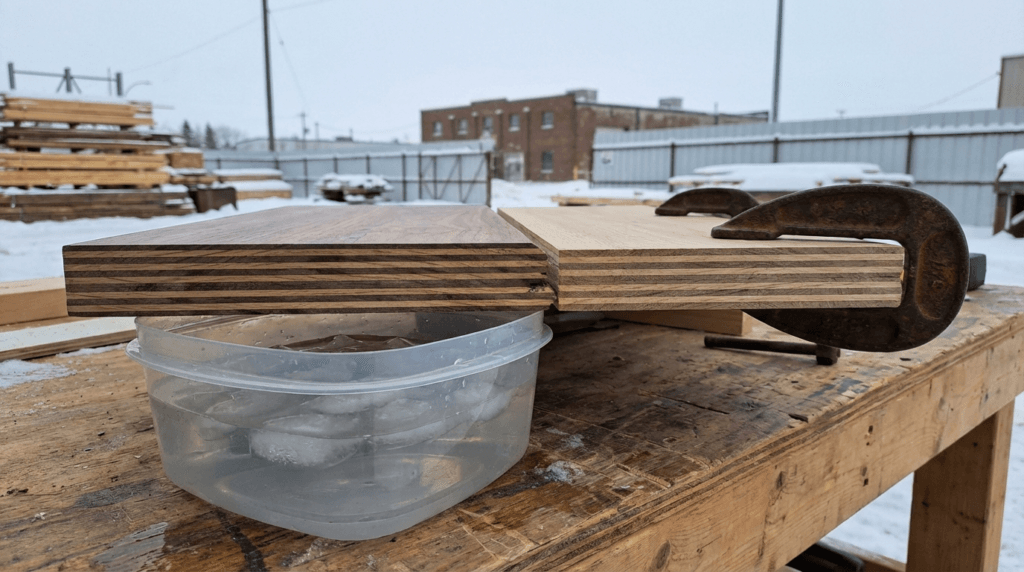
Hardwood plywood: the workhorse
Plywood is the go-to material for commercial cabinets that need to perform under pressure. It is made from thin layers of real wood glued together with the grain of each layer running in alternating directions. That cross-grain construction is what gives plywood its strength.
For commercial work, you want cabinet-grade plywood, not the construction-grade sheets from a building supply store. Cabinet-grade plywood has a smoother face, fewer voids in the inner layers, and tighter quality control.
Plywood handles moisture better than any other sheet material. It does not swell and crumble the way MDF or particleboard can when it gets wet. That makes it the right choice for restaurant kitchens, medical offices, and washrooms.
It also holds screws well. If you need to mount heavy hardware, adjust hinges over time, or reattach a door after years of use, plywood gives you something solid to grip into. MDF and particleboard both struggle with this.
The downside is cost. Plywood runs higher than MDF or melamine, and the price gap gets wider with thicker panels. It also has a visible wood grain, which means it needs a finish, whether that is paint, stain, or laminate.
If you want to learn more about how different materials compare on price and performance, our cabinet materials guide covers the details.
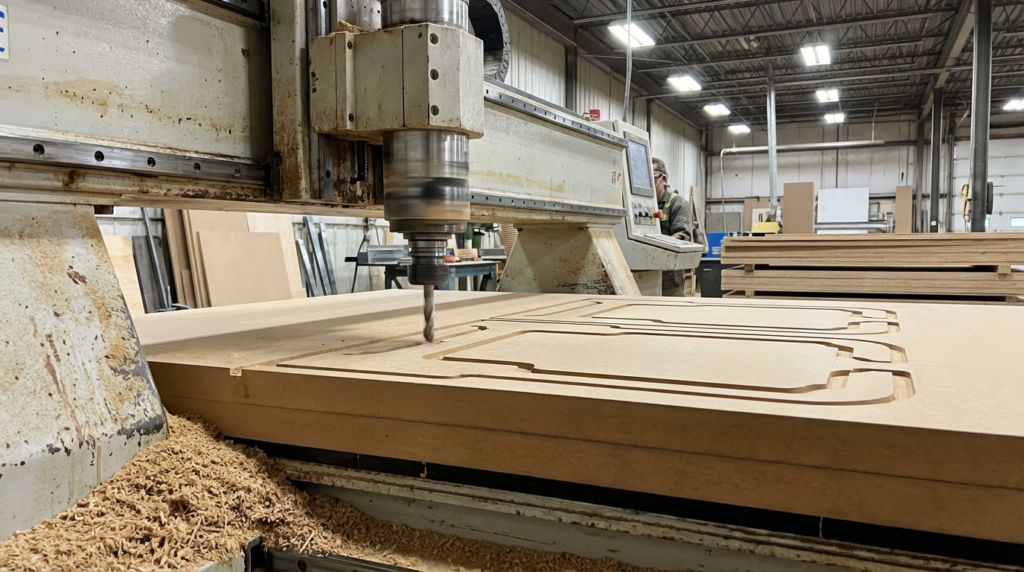
MDF: smooth, affordable, and paint-ready
MDF stands for medium-density fibreboard. It is made from wood fibres mixed with resin and pressed into flat, dense panels. The surface is perfectly smooth with no grain, which makes it ideal when you want a clean, painted look.
Commercial-grade MDF is denser and more consistent than the standard product sold for home projects. It machines cleanly on a CNC router, which matters when you need precise panel cuts and routed edge profiles for a professional finish.
MDF costs less than plywood, sometimes 20 to 30 percent less depending on the thickness and grade. That makes it attractive when the budget is tight and you need a large volume of cabinetry.
The catch is moisture. MDF absorbs water and swells. Once it swells, the damage is permanent. You cannot sand it back or dry it out. This makes MDF a poor choice for any space where water, steam, or frequent wet cleaning is part of daily life.
MDF is also heavier than plywood and does not hold screws as well. For upper cabinets that get opened and closed constantly, plywood or a plywood-and-MDF combination will hold up longer.
Where MDF works well: corporate offices, retail display cabinets, conference rooms, and school classrooms where moisture is not a concern and a smooth painted surface is the goal.
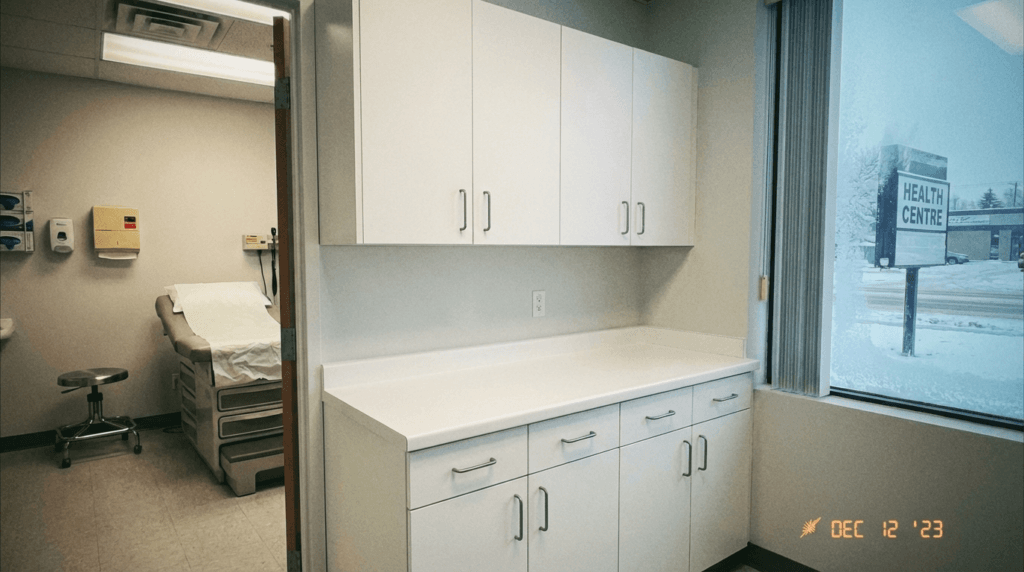
Melamine and laminate: the protective shell
Melamine is not a cabinet material on its own. It is a hard, resin-based coating that is bonded to a substrate, usually particleboard or MDF. The result is a panel with a durable, easy-to-clean surface that comes in hundreds of colours and patterns.
High-pressure laminate (HPL) is a step up from melamine. It is thicker, tougher, and more resistant to scratches and impact. You will see HPL on countertops and on cabinet faces in high-traffic commercial spaces.
The appeal of melamine and laminate is maintenance. These surfaces wipe clean easily, resist stains, and do not need painting or refinishing. For medical clinics, dental offices, and food service areas, that easy cleanup is a real advantage.
The weak point is the substrate underneath. If the melamine coating chips or the edge banding peels, the particleboard or MDF core is exposed. And those cores are both vulnerable to moisture. Quality edge banding and proper installation prevent most of these issues, but it is worth knowing the risk.
For a more detailed look at how different finishes hold up in commercial settings, check out our cabinet finishes guide.
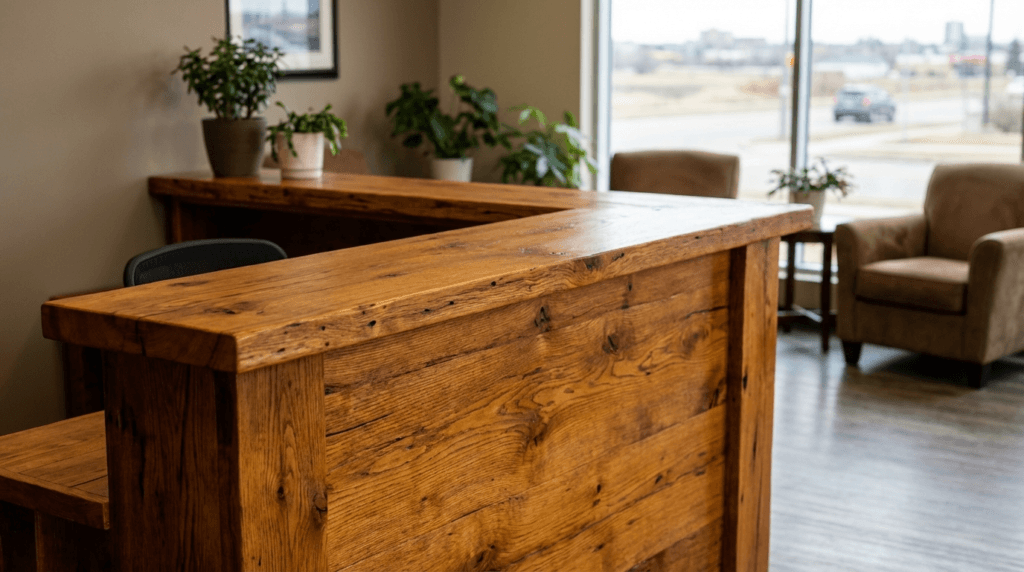
Solid wood: when appearance is everything
Solid wood cabinets are the most expensive option, and for most commercial applications, they are not necessary. But in certain spaces, nothing else delivers the same look.
Think executive boardrooms, upscale restaurant dining rooms, boutique retail, and custom reception desks where the cabinetry is part of the brand experience. In those settings, the depth and character of real wood grain is hard to replicate with laminates or veneers.
Solid wood is strong and can be repaired, sanded, and refinished multiple times over its life. A well-built solid wood cabinet can last decades with proper care.
The downsides are cost, weight, and movement. Wood expands and contracts with changes in humidity and temperature. In Saskatchewan, where indoor humidity can swing from very dry in winter to more humid in summer, that movement needs to be accounted for in the design. A skilled millwork team knows how to build for that, but it adds complexity and cost to the project.
For most commercial projects, solid wood makes sense as an accent rather than the primary material. Use it for visible door fronts, decorative panels, or trim, and use plywood or MDF for the cabinet boxes behind them.
Match the material to your industry
Here is a quick reference for which materials tend to work best in different commercial settings.
For healthcare and dental offices, plywood with high-pressure laminate is the standard. It handles constant cleaning with disinfectants and resists moisture from handwashing stations.
For restaurants and commercial kitchens, plywood is the safest bet for the cabinet boxes. Laminate surfaces on the exterior keep things easy to clean and compliant with health codes.
For corporate offices and boardrooms, MDF with a quality paint finish delivers a clean, modern look at a reasonable cost. Add solid wood accents if the space needs warmth.
For retail stores, MDF or melamine works well for display cases and storage. The smooth surfaces take paint and laminate finishes that match your brand colours.
For schools and educational facilities, melamine-faced panels on a plywood or MDF core balance durability with cost. Edge banding quality matters here because students are hard on furniture.
If you are not sure which combination is right for your project, we can walk you through the options. Call us at (306) 975-2020 or request a free quote.
Do not forget about hardware and construction
The material you choose is only part of the equation. How the cabinets are built matters just as much.
For commercial cabinets, look for these construction details: dowel or dado joinery instead of just staples, full-extension drawer slides rated for the weight you need, soft-close hinges that hold up after thousands of cycles, and adjustable shelves with sturdy shelf pins.
The commercial-grade hardware costs more upfront, but it is what separates cabinets that last 5 years from cabinets that last 20. Our custom millwork process factors in hardware selection during the design phase so there are no surprises during installation.
Think about the total cost, not just the material cost
The cheapest material upfront is rarely the cheapest material over time. A set of particleboard cabinets might save you $3,000 today but cost $8,000 to replace in five years.
When you are comparing materials, factor in how long you plan to stay in the space, how hard the cabinets will be used, and what it would cost to replace them if they fail early. For a restaurant that plans to be in the same location for 10 or more years, spending more on plywood now saves money over the life of the business.
Also consider maintenance. Painted MDF needs touch-ups over time. Laminate surfaces may need edge repairs. Solid wood may need refinishing every few years. Ask about maintenance requirements before you commit to a material.
Get advice before you commit
Every commercial space has different demands. A material that works perfectly in one building might be the wrong choice in another. The best way to get it right the first time is to talk with someone who has built cabinets for businesses like yours.
At Broadway Millwork, we have been helping Saskatchewan businesses choose the right materials since 1995. We will look at your space, talk through your needs, and give you an honest recommendation, not just the most expensive option.
Call us at (306) 975-2020 or request your free quote online. We are available Monday to Friday, 7 a.m. to 6 p.m.
Frequently asked questions
What is the most durable material for commercial cabinets?
Hardwood plywood is the most durable option. It resists warping, holds up to moisture better than MDF, and can handle daily wear in busy spaces like restaurants and medical offices. For areas with less traffic, MDF with a quality laminate finish is a good runner-up.
Is MDF or plywood better for commercial cabinets?
It depends on your space. Plywood is stronger, lighter, and handles moisture better. That makes it the right choice for kitchens, washrooms, and high-traffic areas. MDF has a smoother surface that takes paint well and costs less, so it works for offices, conference rooms, and retail displays where moisture is not a factor.
How much do commercial cabinet materials cost compared to residential?
Commercial-grade materials cost more because they are built for heavier use. Expect to pay 15 to 30 percent more for commercial-grade plywood or MDF compared to standard residential products. The higher cost pays for itself through longer life and fewer repairs.
What cabinet material is best for a medical office?
Melamine-faced panels or high-pressure laminate over plywood are the most common choices for medical offices. These surfaces can be wiped down with hospital-grade disinfectants without damage. Avoid porous materials like unfinished solid wood.
Can I mix different cabinet materials in one project?
Yes, and many commercial projects do. You might use plywood for base cabinets that get more wear, and MDF for uppers that hold lightweight items. Mixing materials lets you put your budget where it counts.
How long do commercial-grade cabinets last?
With proper materials and installation, commercial cabinets last 15 to 25 years or more. Plywood cabinets with quality hardware tend to last the longest. Regular maintenance and quality finishes extend the life of any material.
Request a Quote
Service Areas
We serve businesses across Saskatchewan, from Saskatoon and Regina to smaller regional centres throughout the province. Here are some of the communities where we regularly complete commercial millwork projects:
- Saskatoon
- Regina
- Prince Albert
- Moose Jaw
- Swift Current
- Yorkton
- North Battleford
- Lloydminster
- Estevan
- Weyburn
- Martensville
- Warman
- Humboldt
- Meadow Lake
Don’t see your community on the list? We take on projects across Saskatchewan and into neighbouring provinces, including Alberta and Manitoba. Contact us to discuss your project location and we’ll let you know how we can help.